
Quick Answer
The best uses of QR codes for businesses include digital menus, contactless payments, product information pages, customer feedback forms, social media linking, event check-ins, loyalty programs, and marketing campaigns. QR codes bridge the gap between offline and online experiences, making them one of the most cost-effective tools for modern business growth.
Key Takeaways
- QR codes connect physical touchpoints to digital experiences instantly
- Dynamic QR codes can be edited after printing, making them far more flexible than static ones
- Businesses use QR codes for payments, menus, feedback, marketing, and lead generation
- QR code marketing reduces print costs while improving campaign tracking and ROI
- Small businesses benefit significantly from QR codes because they require minimal investment
- Restaurants, retail stores, real estate agents, and healthcare providers are among the biggest users
- QR codes integrate with CRM systems, email marketing, and analytics platforms
- Mobile engagement through QR codes supports omnichannel marketing strategies
- Free QR code generators make it easy for any business to get started without a budget
- QR codes are still highly effective in 2026 and continue to grow in adoption
Introduction
If you have ever pointed your phone camera at a small square of black-and-white patterns and been instantly taken to a website, a menu, or a payment page, you already understand the power of QR codes. What started as a simple inventory tracking tool in Japan back in the 1990s has become one of the most versatile business technologies available today.
For businesses of all sizes, QR codes offer a fast, affordable, and incredibly flexible way to connect customers with information, payments, promotions, and experiences. Whether you run a local restaurant, an e-commerce store, a real estate firm, or a large enterprise, there is almost certainly a QR code strategy that can help you grow.
This guide covers everything you need to know about the best uses of QR codes for businesses, including practical examples, real-world applications, and the tools you need to get started today.
What Is a Business QR Code?
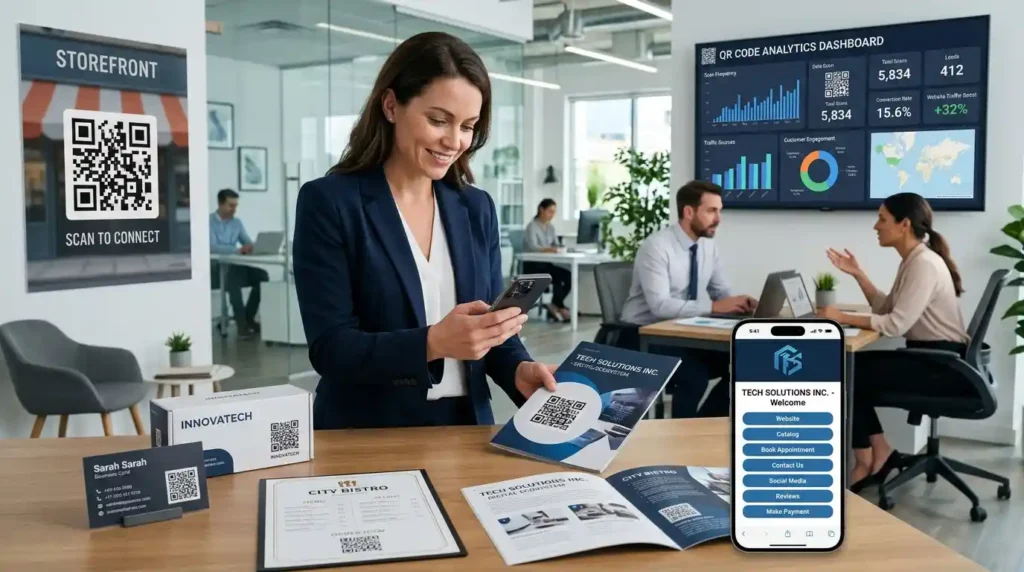
A QR code, which stands for Quick Response code, is a two-dimensional barcode that smartphones and other devices can scan to instantly access information. Unlike traditional barcodes that store only a few numbers, QR codes can hold URLs, contact details, Wi-Fi credentials, payment information, plain text, and much more.
A business QR code is simply a QR code created and used for commercial purposes. It might link customers to your website, direct them to a Google review page, trigger a digital menu, or process a contactless payment. The key characteristic that makes business QR codes especially powerful is the option to use dynamic QR codes, which allow you to change the destination URL or content without reprinting the code itself.
Static QR codes point to a fixed destination and cannot be changed. Dynamic QR codes are editable and also provide scan analytics, showing you how many people scanned the code, when, and from which location. For marketing purposes, dynamic QR codes are almost always the better choice.
You can create a free QR code right now using the QR Code Generator at Mega Free Tools, which requires no sign-up and delivers a ready-to-use code in seconds.
Why Should Businesses Use QR Codes?
The short answer is that QR codes make it effortless for customers to take action. Instead of asking someone to type in a URL, search for your business on social media, or fill out a paper form, a QR code removes every single step of that friction. One scan and they are exactly where you want them to be.
Here is why businesses across the world are using QR codes more than ever in 2026:
Cost efficiency. Printing a QR code costs virtually nothing. A single code on a flyer, product label, or window sticker can replace pages of printed information and be updated digitally at any time.
Measurable results. Unlike traditional print advertising, dynamic QR codes provide real scan data. You can see which campaigns are driving engagement, which locations are generating the most scans, and what times of day your customers are most active.
Offline-to-online conversion. One of the biggest challenges in marketing is moving people from a physical environment into your digital ecosystem. QR codes solve this problem elegantly. A scan on a product package, a business card, or a restaurant table tent can take a customer directly to your website, social media page, loyalty program, or checkout page.
Customer experience. People expect fast, contactless, and frictionless experiences. QR codes deliver exactly that, whether someone is ordering food, checking in at an event, or reviewing a product before purchase.
Versatility. The same technology works in a coffee shop, a hospital, a trade show booth, a real estate listing, and a product package. Few tools offer this level of cross-industry flexibility.
The Best Uses of QR Codes for Businesses
1. Digital Menus for Restaurants and Cafés
Perhaps the most widely recognized use case after the pandemic, QR code menus have become the standard in restaurants, cafés, and bars around the world. Customers scan a code on the table and instantly view the menu on their own device. No printing costs, no menu hygiene concerns, and the ability to update prices or items in real time without ordering new menus.
Many restaurants take this further by linking QR codes directly to an online ordering system, allowing customers to place and pay for orders without ever interacting with a server. This reduces wait times, increases table turnover, and improves the overall dining experience.
2. Contactless Payments
QR code payment solutions are now a mainstream alternative to card machines and cash in many markets. Businesses can display a static payment QR code at checkout, and customers scan it to complete a transaction through their mobile banking app or payment platform. This is particularly popular for small businesses, market stalls, pop-up shops, and service providers who want a low-cost payment solution.
3. Business Cards and Networking
A QR code on a business card is one of the simplest and most effective upgrades any professional can make. Instead of a card that gets thrown in a drawer, a QR code business card takes the recipient directly to your LinkedIn profile, portfolio website, booking page, or contact form. It creates an immediate digital connection that a traditional card cannot.
For anyone looking to modernize their networking game, adding a QR code to your business card takes about two minutes using a free tool and can dramatically increase how many new contacts actually follow up with you.
4. Customer Feedback and Reviews
Collecting customer feedback used to mean printed forms, email follow-ups, or intrusive pop-ups. QR codes simplify this completely. Place a code on a receipt, a table card, a product package, or the back of a delivery box, and customers can scan it to leave a Google review, fill in a satisfaction survey, or rate their experience.
This is one of the highest-value uses of QR codes for small businesses because a steady stream of genuine reviews directly impacts your search visibility, your reputation, and your ability to attract new customers.
5. Product Information and Smart Packaging
Brands are increasingly using QR codes on product packaging to deliver rich information that simply cannot fit on a label. Scan the code on a wine bottle and you might find information about the vineyard, food pairing suggestions, and recipes. Scan a code on an electronics product and you get the full manual, warranty registration, and video tutorials.
This approach reduces printing costs, enhances the customer experience, and enables brands to update product information without changing packaging. It also supports sustainability goals by eliminating the need for bulky printed inserts.
6. Marketing Campaigns and Advertising
QR code advertising turns any physical surface into an interactive marketing channel. Print ads, billboards, packaging, direct mail, and even television commercials can include a QR code that takes viewers directly to a landing page, a video, a promotion, or a product page.
The famous Coinbase Super Bowl ad in 2022, which was nothing more than a bouncing QR code on screen for 60 seconds, drove millions of website visits and became one of the most talked-about advertising campaigns of the year. That example alone proved that when QR codes are used creatively, they generate enormous engagement.
For local businesses, QR codes on flyers, posters, and direct mail campaigns allow you to track exactly how many people respond to your offline marketing, giving you data you would never get from a traditional leaflet drop.
7. Social Media Marketing
Growing a social media following is far easier when you remove the search step. A QR code that goes directly to your Instagram, TikTok, or Facebook page can be placed on packaging, in-store displays, event materials, or receipts. When customers are already engaged with your brand in a physical space, a QR code is a natural and unobtrusive way to invite them into your online community.
8. Event Management and Check-In
QR codes have transformed event management for everything from small local workshops to large conferences. Attendees receive a unique QR code in their confirmation email, which they present at the door for instant check-in without queues or paper lists. Organizers can track attendance in real time, reduce staffing requirements, and eliminate the risk of lost tickets.
Beyond entry, events can use QR codes at breakout sessions, exhibitor stands, and information boards to connect attendees with schedules, speaker bios, resources, and post-event surveys.
9. Wi-Fi Access
Asking customers to type in a complicated Wi-Fi password is a frustrating experience that most people simply give up on. A QR code that connects guests to your network automatically is a small but genuinely appreciated convenience. Place it at reception, on tables, in hotel rooms, or in waiting areas. This also keeps your actual password private, since you can change the code if you ever update the credentials.
10. Loyalty Programs and Customer Retention
Customer loyalty programs traditionally require apps, plastic cards, or account sign-ups that many customers resist. QR codes lower the barrier significantly. A customer can scan a code at checkout to collect points, redeem rewards, or access exclusive offers without downloading anything.
For small businesses especially, a simple QR-based loyalty system can compete with much larger brands at a fraction of the cost.
11. Real Estate Marketing
Real estate agents are using QR codes on for-sale signs, window displays, and property brochures to give potential buyers instant access to virtual tours, floor plans, mortgage calculators, and agent contact pages. A buyer who drives past a property at 9pm on a Sunday can get all the information they need immediately, keeping them engaged until business hours.
12. Healthcare and Patient Experience
Hospitals, clinics, and pharmacies use QR codes for patient intake forms, appointment reminders, medication instructions, discharge paperwork, and wayfinding. This reduces administrative burden, minimizes paper use, and improves the patient experience by making information more accessible.
13. Inventory Management
Warehouses and retail operations use QR codes to track stock levels, record locations, log movements, and manage returns. Unlike traditional barcodes, QR codes hold significantly more data and can be scanned from any angle, making warehouse operations faster and more accurate.
14. Email Marketing Integration
Adding a QR code to a physical piece of mail, a product, or a receipt that leads directly to an email subscription page is an underused but highly effective lead generation strategy. It converts in-store customers and physical touchpoints into long-term email subscribers who can be nurtured over time.
Static vs Dynamic QR Codes: Which Is Right for Your Business?
| Feature | Static QR Code | Dynamic QR Code |
|---|---|---|
| Content editable after creation | No | Yes |
| Scan analytics | No | Yes |
| Best for | Permanent info (Wi-Fi, vCards) | Marketing, campaigns, tracking |
| Cost | Free | Usually requires a paid plan |
| Redirect flexibility | Fixed | Fully flexible |
For most business marketing purposes, dynamic QR codes are worth the investment. For simple, permanent uses like Wi-Fi access or a fixed website link, a free static code from a tool like the Mega Free Tools QR Code Generator is perfectly sufficient.
Common QR Code Mistakes Businesses Make
Using static codes for marketing. If you cannot change where the code leads, you lose the ability to update campaigns, correct errors, or redirect traffic after printing. Always use dynamic codes for marketing materials.
Making the code too small. A QR code that is smaller than about 2cm x 2cm becomes unreliable to scan, especially in low light. When in doubt, go bigger.
Not testing before printing. Always scan your code on multiple devices before going to print. A broken QR code in a print run is an expensive mistake that damages your credibility.
Linking to non-mobile-optimized pages. Most QR code scans happen on mobile devices. If the landing page is not mobile-friendly, you will lose the customer the moment they arrive. Check your page with Google’s Mobile-Friendly Test before deploying any campaign.
No call to action. A QR code without a clear instruction is often ignored. Adding simple text like “Scan for our menu” or “Scan to save 10%” dramatically increases scan rates.
Placing codes in low-signal areas. A QR code in a basement car park or a location with no mobile signal will simply not work. Think about where your customer will be when they scan.
Forgetting to track performance. One of the biggest advantages of QR codes is the data they provide. If you are not monitoring scan rates, you are missing the entire point of using dynamic codes.
Best Free Tools for Creating Business QR Codes
Getting started with QR codes for your business does not require a big budget. Several excellent free tools make it easy to generate professional-looking codes in minutes.
The QR Code Generator at Mega Free Tools is one of the simplest options available. It is free, requires no account, and produces a clean, scannable code instantly. For businesses that also need to manage supporting assets like logos, product images, or marketing materials, the image compressor, image resizer, and background remover on the same platform make it easy to prepare visuals for your campaigns.
If your QR codes link to documents or PDFs, tools like the PDF compressor, Word to PDF converter, and JPG to PDF tool ensure your linked files are fast-loading and professionally formatted.
For businesses creating printable marketing materials, the PNG to PDF converter and text to PDF tool round out a practical free toolkit that covers most day-to-day needs. You can explore the full range at megafreetools.com/tools.
Other popular QR code platforms include QR TIGER, Beaconstac, Scanova, and Bitly, all of which offer analytics-enabled dynamic codes at varying price points. Canva also offers basic QR code generation as part of its design toolkit.
Real-World QR Code Success Stories
A small bakery in Austin, Texas replaced all of its printed loyalty punch cards with a single QR code at the counter. Customers scan to earn stamps and redeem free items. Within three months, loyalty program membership increased by 340% because the barrier to joining had dropped to a single scan.
A boutique clothing retailer in London added QR codes to swing tags on every garment. Each code linked to a page showing how the item was made, the materials used, and styling suggestions. Customers who scanned spent an average of four additional minutes on the website and converted at nearly double the rate of regular website visitors.
A real estate agency in Chicago placed QR codes on all property signage linking to video tours. They tracked 2,300 scans over a single month across twelve properties, giving them precise data on which listings generated the most interest and at what times of day buyers were most active.
Future Trends: Where QR Codes Are Headed
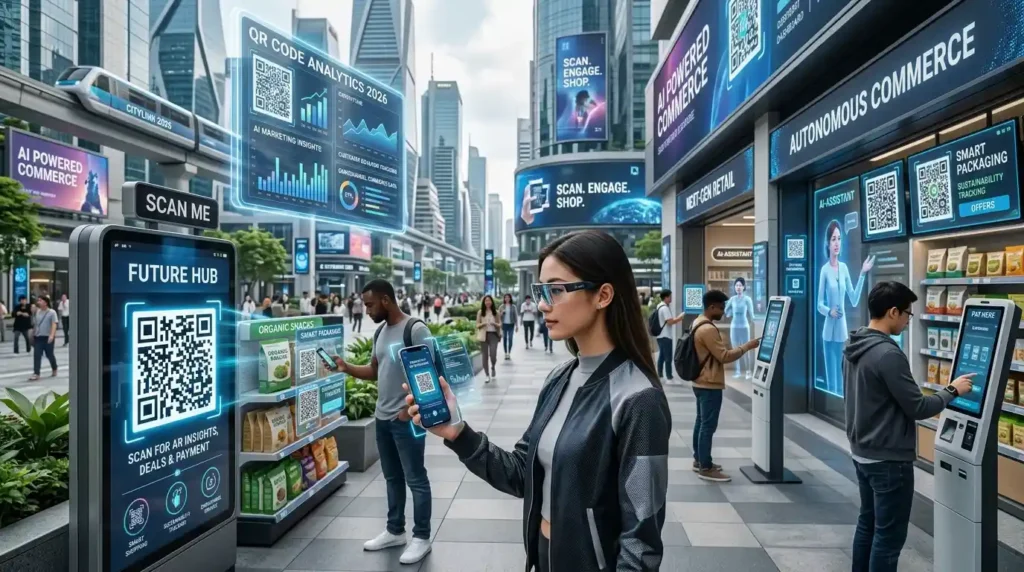
QR codes are not going anywhere. If anything, they are becoming more sophisticated. Here is what businesses should watch:
AI-powered QR experiences. Artificial intelligence is being integrated into QR workflows, enabling personalized landing pages that change based on scan location, device type, time of day, or previous scan behavior. A customer who has scanned your code before might see a returning customer offer. A first-time scanner gets a welcome discount.
Augmented reality integration. Some brands are combining QR codes with AR experiences, where scanning a product package triggers an interactive 3D display or an instructional video overlay.
First-party data collection. As third-party cookies disappear from the web, QR codes are becoming a valuable first-party data collection channel. Each scan can capture opt-in data, location signals, and behavioral intent that feeds directly into CRM and marketing automation systems.
Smart packaging and sustainability. Brands are replacing printed product inserts entirely with QR codes, reducing waste and enabling real-time content updates. The GS1 Digital Link standard is pushing this further by enabling QR codes that carry rich product identity data readable by supply chains, retailers, and consumers alike.
Voice-assisted QR interactions. As voice interfaces improve, we will likely see QR codes that trigger voice-guided experiences, particularly useful in accessibility contexts and hands-free environments.
FAQ: Best Uses of QR Codes for Businesses
What is the best use of a QR code for a small business?
For most small businesses, the best starting point is a QR code on business cards and customer receipts linking to a Google review page. This costs nothing to implement and directly impacts your online reputation. From there, adding QR codes to loyalty programs and marketing flyers provides measurable returns with very low investment.
Are QR codes still effective in 2026?
Yes, QR codes are more effective than ever. Global QR code scans have grown consistently year over year since 2020. Smartphone cameras now scan QR codes natively without any additional app, which removed the biggest barrier to adoption. Businesses across retail, hospitality, healthcare, real estate, and events rely on them daily.
What is the difference between static and dynamic QR codes?
A static QR code points to a fixed destination that cannot be changed after creation. A dynamic QR code can be updated at any time without reprinting the code, and it provides scan analytics including scan count, location, and device type. For marketing purposes, dynamic codes are significantly more useful.
How do QR codes improve customer engagement?
QR codes reduce friction between intent and action. When a customer sees something they want to explore further, a QR code gives them an immediate path to more information, a purchase, a review, or a reward. This convenience increases engagement because the customer does not have to search, type, or wait.
Can QR codes increase sales for businesses?
Yes. QR codes have been shown to increase conversion rates when placed at strategic points in the customer journey. Linking product QR codes to upsell pages, discount offers, or loyalty rewards creates additional purchase opportunities that would not exist with printed materials alone.
How do I track QR code scans?
Dynamic QR code platforms provide built-in analytics dashboards showing total scans, unique scans, scan location, device type, and time of scan. You can also append UTM parameters to the destination URL to track QR code traffic within Google Analytics alongside your other marketing channels.
Are QR codes safe for businesses to use?
QR codes themselves are a neutral technology and are as safe as the destination they point to. The risk comes from malicious QR codes created by bad actors, not from legitimate business codes. Businesses should use reputable QR code generators and ensure their destination URLs use HTTPS. Customers can protect themselves by previewing the URL before opening it.
How much do business QR codes cost?
Free static QR codes are available from numerous tools including the Mega Free Tools QR Code Generator. Dynamic QR codes with analytics typically start at around $5–$15 per month on most platforms, with enterprise plans available for businesses managing large volumes of codes across multiple locations.
Which industries benefit most from QR codes?
Restaurants and hospitality, retail, real estate, healthcare, education, events, and e-commerce are among the highest-adopting industries. However, any business that communicates with customers through physical materials, packaging, signage, or print advertising can benefit from adding QR codes to their strategy.
How do I create a QR code for my business?
The simplest way is to use a free online generator. Visit the Mega Free Tools QR Code Generator, enter the URL or information you want to encode, generate the code, and download it. The entire process takes under two minutes and requires no account or payment.
Expert Summary
QR codes have evolved from simple barcode alternatives into a foundational tool for modern business marketing and customer engagement. Their ability to bridge physical and digital environments makes them uniquely effective across industries ranging from hospitality and retail to healthcare and real estate. Dynamic QR codes in particular offer marketers a measurable, flexible, and cost-efficient channel for campaign tracking, lead generation, loyalty programs, and omnichannel customer experience. With smartphone adoption at near-universal levels and QR scanning built into native camera apps, the technology has never been more accessible or more relevant for businesses of any size.
Conclusion
QR codes are one of those rare technologies that genuinely deliver more value than their simplicity suggests. A small square of pixels can replace a stack of printed menus, a plastic loyalty card, a lengthy URL on a business card, and an entire paper-based feedback process. For businesses looking to reduce costs, improve customer experience, and gain better visibility into their marketing performance, QR codes are an obvious and immediate win.
The good news is that getting started requires almost no investment. If you want to create a QR code for your business today, the free QR Code Generator at Mega Free Tools has you covered in under two minutes, no sign-up required.
And if you need other tools to support your business operations, from compressing PDFs and converting images to resizing graphics for your marketing materials, explore the full suite of free utilities at Mega Free Tools. Everything you need to run a more efficient, more connected business is right there, and it will not cost you a thing.